Birthright
On the freedom to belong

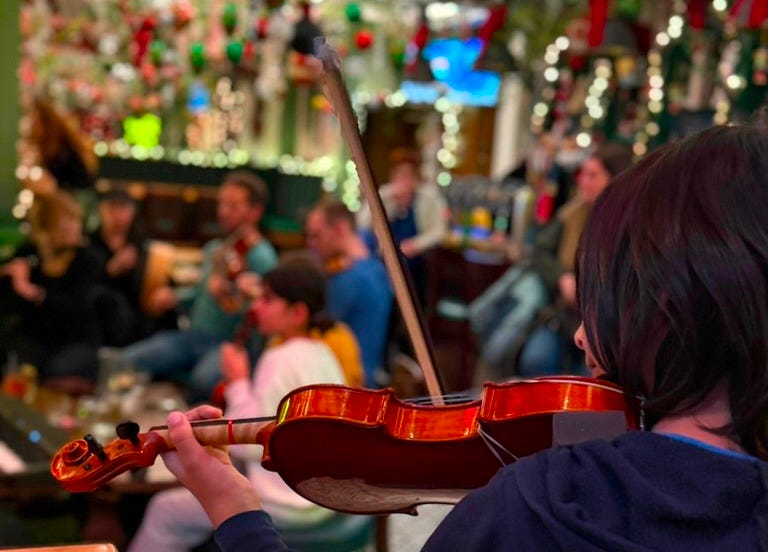
My son, the little one, has been taking an Irish fiddling class. He loves it, but even more, I love it. Parents aren’t required to stay during the lesson, but still I perch on a chair in the back, tap my foot, watch breathless as the teacher guides the room in a new tune each week: often a jig or a polka, lately hornpipes, and after spring break he’s promised to teach the kids a couple of reels. Every week I wonder if it’s too late for me to pick up the violin. I imagine doing it, and then, because it is in my nature to overthink things to an absurd extent, I imagine that I end up dedicating my life to playing the music of a culture that isn’t mine.
But the music! I love it! a part of my brain shouts.
When you were in Dublin, a man on the street barked at you, another part replies.
My son’s teacher talks frequently about his own teacher, the head of a prominent New York Irish fiddling family, and he invites the kids out to play in Irish music sessions in bars around the city. At the last class, one of the kids asked him if he himself was Irish. “I’m a Jew from New Jersey!” he replied, grinning. In his hands, in his world, Irish music is both a heritage and entirely inheritable by whoever is interested in it; the threshold is the floor.
In college I took a class on Irish literature. The professor, who was American of Irish descent, was rumpled and tweedy and blew into class every day as if he’d just escaped a squall, even though outside it was sunny and eighty degrees. He talked about Cú Chulainn and Yeats and Synge, jumping from one topic to another, sometimes pausing to sing a few lines or recite a verse, until he invariably mentioned the Kennedys, at which point he would begin to cry. He loved the Kennedys. It was a good class except for the part where the professor would constantly ask me if x thing were similar or different than it was in India. There was also a Jewish girl in the class to whom he’d pose similar questions. At one point both of us revolted and told him to stop singling us out that way. He was genuinely surprised that we did not want to represent “our” communities the way he sought to represent Ireland.
Possibly the most American thing about me, growing up, was my unshakable belief that what made a person American was being in America. I had no idea that birthright citizenship didn’t exist in other countries until I was an adult. You were born in America? Then of course you’re an American! But also, so what if you weren’t? If you come here, if being here pleases you, if it speaks to your soul in some way, if it sings the song of home in your heart—if that didn’t make someone an American, what possibly could?
Because I felt this way, I could not comprehend why people refused to see me as American. There was my Irish lit professor, of course; there was the guy standing outside the Métro in Paris who yelled at me for wearing a tank top and thus not “respecting my Indian heritage”; there was the old man in my MFA class who berated me for writing an essay on a similar subject to this one because, he insisted, it was illegitimate to feel upset at people who wanted to poke and prod at me like a zoo animal; there were the hundreds of people across the span of my life that had asked where I was from and then looked utterly panicked when I told them I was born in Canada. The friction of it was erosive; the more people asked me to represent something else, somewhere else, the less American I became. But if I wasn’t American, what exactly could I be?
I didn’t think I was American when I moved to Spain, but living there taught me that the rhythms of American life were my own, my electric pulses were synced to the spirit of enterprise and ambition, and that I had, unshakably, the ridiculous optimism of a golden retriever. It was annoying, really. I wanted to be chic and morose. Instead, I was a jangly try-hard.
Once a week I went to the glassy offices of a Bertelsmann executive and conversed with him in English. His father, he told me, had immigrated from Morocco when he was young; the executive himself had been born and raised right there, in Barcelona. Despite this, the people he grew up with, his friends and neighbors, did not consider him Spanish. But do you consider yourself Spanish? I asked him in my dumb retrieverish way. It doesn’t matter, he said, he would never be considered Spanish, would certainly never been considered Catalan, despite Catalunya being the only home he’d ever known. I do not think he meant that he wasn’t a citizen; I’m pretty sure that he was. But culturally, no one would ever look at him and see a Spaniard. The man had children, and they too were not considered Spaniards.
I still think about this man a lot. I also think about the Sri Lankan pizzaiolos in Tuscany who made the best pizza I ever had. I think about the two different Sri Lankan-French bakers who won France’s best baguette awards in 2023 and 2026. (I think: what it is with bread and Sri Lanka?) I think about who is accepted and who is not. What it means to love something so much that you look at the threshold and only see floor.
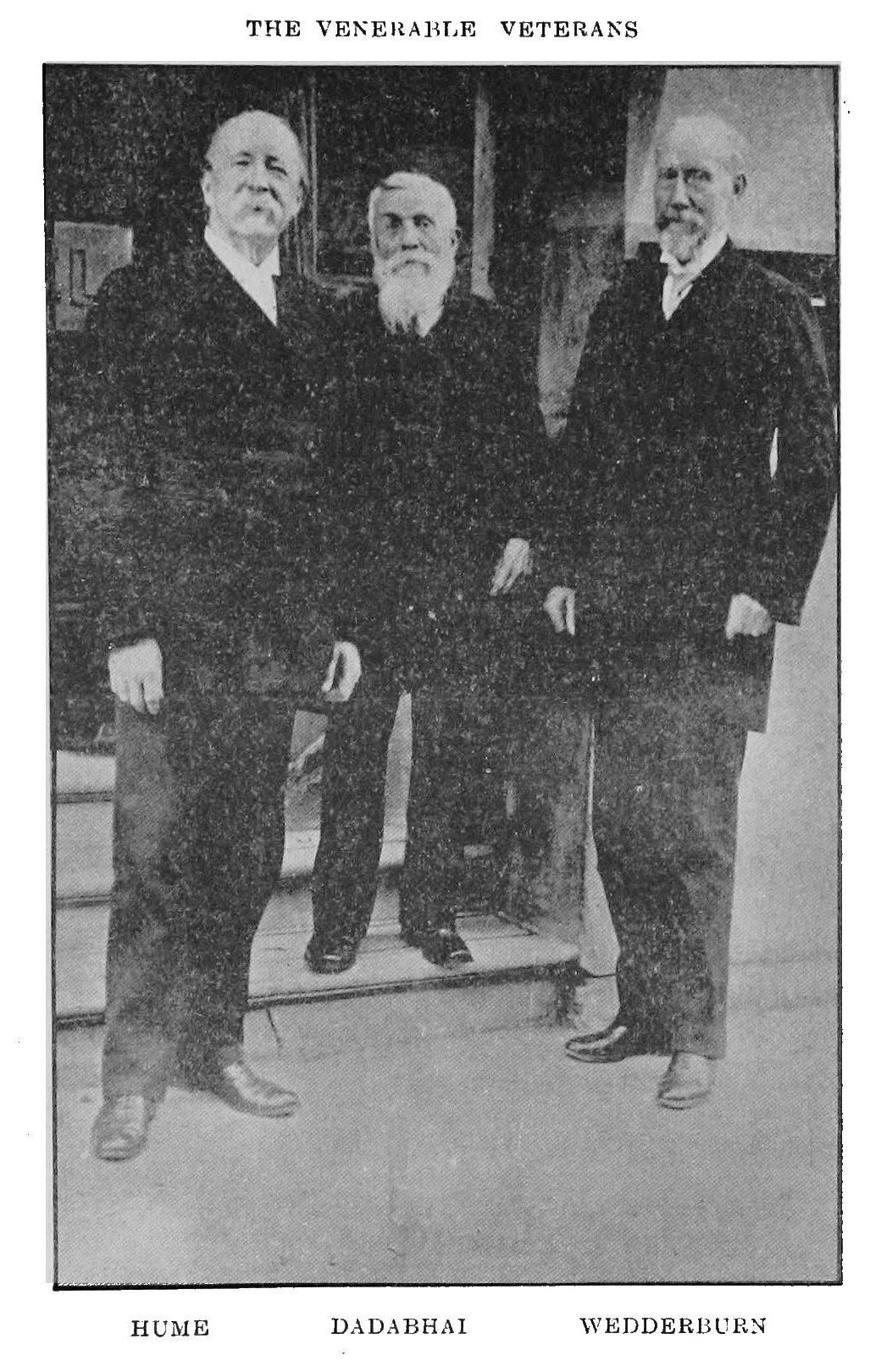
Eventually I became interested in India. I became really interested, but in my own way: with colonial history, with the archives full of the condescending reports of British officers, with the travelogues of white men and women who held their noses as they suffered to live on the subcontinent, but also with the reports of the nascent Indian National Congress, which were studded with the European names of those who had embraced the country to such an extent that they were now fighting for India’s freedom. The people in the reports I identified with most were the Indian men who wore three-piece suits and quoted Keats but still ached for their own liberation, how they sat together with the men who wore khaddar and talked together about what it meant to be Indian, how they would build a nation that embraced the great messy multiplicity of India[1].
I was obsessed, and India began to sing to me. But the song was muffled somewhat by a resentment I couldn’t shake. This is what they wanted of me, after all—to be Indian. And I really did feel more Indian! And now when people came up to me presuming I would want to talk about India, I actually did want to talk about it. But I also hated that they presumed I wanted to talk about it!
The first time I picked up Katie Kitamura’s novel Intimacies, I immediately recognized the narrative voice as the register of my own heart. Intimacies is about a woman who moves to the Hague to work as an interpreter in the criminal court. She is a woman with no home, for whom the city represents a hope of home, and she becomes involved with a man who is so rooted within it that he can’t escape the tangle of his past. At the same time, she must translate for the former president of an unnamed African country who’s on trial for war crimes, making his unspeakable acts legible from French, the language of his colonial past, into English, the language of the post-colonial present. Intimacies is a beloved book, and yet I think it is also often misunderstood, because to understand it, I believe, you must be standing at the precipice of a lot of places, yearning for one of them to feel uncomplicated.
Not long ago, a friend and I were discussing Wolf Hall. Thanks to me talking about it, he’d re-read the first book and then devoured the second one. (True to the slow read experience, I am still in book one.) My friend is also Indian—he grew up in India—and when I asked if he was going to read the third, he expressed ambivalence, questioning the time and attention he was willing to give to this history that had nothing to do with him. I understood exactly. A glimmer of the same thought had been lurking in the back of my head, too. Pretty much all of English history after 1600, when the East India Company was founded, is also Indian history, but the Reformation took place the century before. What business was it of ours? What time and attention were we willing to freely give to a culture that had demanded so much of our time and attention already? Who would we be if we hadn’t been asked to care so much about the Henrys and Elizabeths of it all—or if, conversely, they had cared more about the Akbars and Aurangzebs? And if we cared anyway—well, what then? What did it mean? Why did it sit so heavy, this feeling that it had to mean something?
A few days ago, an old neighbor of mine died. She was twelve years older than me, but when we lived on the same floor, in a converted shoe factory in the Village, we hung out all the time. She was a painter, and so we talked a lot about our precarious careers, her growing weariness with the art world. At some point she started supporting herself by teaching yoga, and then she got really into it. She no longer wanted to talk about art, she wanted to talk about India, and I stopped seeking her company. This was before I became interested in Indian history, but even so, talking with a white girl from Connecticut[2] about Hindu spirituality was not my idea of a good time. After Jamie and I moved to Brooklyn, I kept tabs on her over Facebook, where she posted about her frequent pilgrimages to an ashram in Tamil Nadu, about her yoga book, about her guru, who was also blazingly white, about her metastatic breast cancer diagnosis and the resurgences that kept her returning to the hospital, and the mantras and yoga principles and stories from Hindu myth that helped her make sense of things. We ran into each other a couple of years ago, right about this time of year, at the Hindu temple on Broome Street. I had come for a special kid-friendly Holi puja, and she hugged me looking radiant and tired and showed me the port that was now permanently lodged in her chest. “I thought you didn’t go for all of this,” she said, and I shrugged and gestured at my kids; I want them to feel this could be theirs, if they want it, the gesture said, and she understood. What I didn’t say, what I didn’t know how to say, was that I had avoided places like this because of people like her, because her joyousness and clarity made me feel ashamed of my own uncertainty and ambivalence, of feeling that all the pushing and prodding had left me so misshapen that I’d never find a place to fit. That I saw the easy way she had embraced a culture that wasn’t her birthright, and I yearned for that freedom.
Before I left, I hugged her again, and we promised to get a coffee sometime. Of course, we never did. But so many times I wanted to reach out and ask her what it was about India and Hinduism and yoga that spoke to her so. What was it that made her soul sing, that made the endless rounds of chemo and hair loss and illness and fear manageable. After I discovered that she’d died, I went to her homepage and looked at all the pictures of her in saris, with her tikka on her forehead, embracing other white people in saris, all of them on the sandstone steps of a dusty village temple, looking for all the world like there was no place a person couldn’t belong.
[1] Not that they succeeded any better than the American founding fathers succeeded. But this is another story.
[2] My memory may be wrong here. If she wasn’t from Connecticut, she was from a place equally associated with whiteness.
I like to say that I’ve never doubted my Peruvian-ness because it’s the one place that can’t deport me 🤣🤣🤣 but we have a very toxic relationship going on. On the other hand, I don’t feel like there’s an adequate alternative for it. I’ve just come to embrace the idea that I never belong and that’s ok. It suits me to be an agent of chaos and disruption 😈😈😈😈
There is no place that you couldn't belong, Priya. Like, objectively.